Uncategorized

Hawaii Endangered Bird Conservation Program

1

Perfect Parrotbill Puppets

Click on the link to watch this parrotbill hatch.

Click on the link in the first paragraph to watch this kiwikiu (parrotbill) hatch.

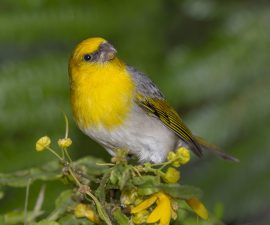
The Maui Bird Conservation Center is pleased to announce the hatch of our second kiwikiu (Maui parrotbill) chick of the breeding season. The chick hatched on April 11 at 11 a.m., and I was lucky enough to see the chick hatching and took this short video clip: Kiwikiu (parrotbill) hatching.mov

The kiwikiu is an endangered, endemic Hawaiian honeycreeper only found in a small range on the eastern slopes of the Haleakala volcano on Maui. This species has been notoriously difficult to breed in captivity, but the Hawaii Endangered Bird Conservation Program has been having more luck in producing chicks in the last few years (see Raising Maui Parrotbills).

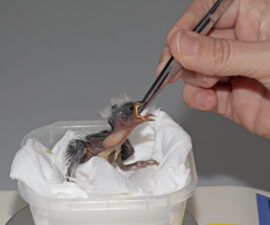
A puppet "parent" feeds the new kiwikiu.

A puppet “parent” feeds the new kiwikiu.

The kiwikiu is a very intelligent species, and we take many steps to keep the birds from imprinting onto humans. We use a hand puppet during feeds as soon as the young chick’s eyes start to open, and this year we thought it was time we “upgraded” our hand puppet.

At the Maui Bird Conservation Center’s Open House last November, I met a lovely local lady, Alyson Danford, who obviously has a real passion for the native wildlife of Hawaii. Alyson grew up on the Big Island of Hawaii but has now lived on Maui for more than 28 years. Alyson created a beautiful quilt of the kiwikiu among the native Acacia koa tree, and she donated this wonderful gift to our program during the open house. I immediately thought of Alyson about making the new hand puppet and contacted her about the project.

Alsyon stands in front of a quilt she made, inspired by the alala's hoped-for return to the wild.

Alyson stands in front of a quilt she made, inspired by the alala’s hoped-for return to the wild.

Alyson was very excited to help us even though she had never made anything like that before, and after a visit to our facility, she came up with two new hand puppets for our program! It was perfect timing when Alyson had the new puppets ready for our newly hatched chick.

We are extremely grateful to Alyson for donating her time and creativity to help us toward our mission of protecting the native birds of Hawaii. Alyson, Mahalo nui loa. Me ka aloha pumehana.

Amy Kilshaw is a research associate at the San Diego Zoo’s Maui Bird Conservation Center. Read her previous post, Nene Come Home.

4

A Trip Down Memory Lane

Rebecca tells students about the work she does helping endangered Hawaiian birds.

Rebecca tells students about the work she does helping endangered Hawaiian birds.

While it has been a long time since I stepped into a classroom, the second I walked onto Pahala Elementary School’s campus a flood of memories of my own school days came rushing back. I remember coming into the first class of the day and still wanting time to chat with my friends. I remember the small tables and chairs that I know I used to fit into, though now it’s difficult to imagine. And while I remember the class bells ringing in school, yesterday I was very nearly shocked out of my skin when the bell signaled the start of class. I guess that’s the sort of thing you never notice as a kid.

That morning I had the pleasure of assisting Robin Keith, a member of the Conservation Education Division at the San Diego Zoo Institute for Conservation Research, in administering an essay contest to the sixth- and seventh-grade classes of Pahala Elementary and Ka‘u High School in Pahala, Hawaii. This essay contest was designed to discover a student’s own interpretation of, and experiences with, wildlife. The information will help guide our conservation education and outreach programs in support of our Hawaii Endangered Bird Conservation Program. Some students struggled at the beginning, not really sure what to write about, but in the end they all submitted great stories. Two winners will be chosen at random, and that student will be taking his or her entire class on a field trip to the ‘Imiloa Astronomy Center of Hawaii.

Students work on their wildlife conservation essays.

Students work on their wildlife conservation essays.

After the essay portion of the class, Robin spoke about current conservation issues facing Hawaii and about techniques used at the Keauhou Bird Conservation Center (KBCC) for saving native Hawaiian birds. Then it was my turn to field any questions that the students had about KBCC. I have spent the past six years working with some of the most endangered and difficult-to-rear bird species in Hawaii, but when it came to commanding the attention of 12 and 13 year olds, I was a bit daunted. Usually, when I’m presenting information about my job, I’m in my workplace with every conceivable prop and medium available to showcase the native birds. Here, however, I was standing at the front of the classroom with nothing but my strong voice, great bird conservation information, a smile, and enthusiasm for my job! In the end, I hope the students walked away with a great writing exercise and some valuable information about Hawaiian bird conservation. I walked away from the campus hoping that I had planted at least one seed of love and respect for native Hawaiian wildlife.

I must send out a very big mahalo (thank you, in Hawaiian) to the teachers of Pahala Elementary and Ka‘u High School for allowing Robin and me to invade their classes and for their enthusiasm in teaching their students environmental education. Another very big mahalo to the wonderful students, who had excellent questions about the birds and embraced the essay-writing challenge. We look forward to future collaborations with students and teachers on the Big Island as we work to foster pride and support for conservation of Hawaii’s natural heritage.

Rebecca Espinoza is a research associate at the San Diego Zoo’s Keauhou Bird Conservation Center.

4

Nene Come Home

The wild nene family strolls the grounds of the MBCC.

The wild nene family strolls the grounds of the MBCC.

Over the last 17 years, 442 nene (Hawaiian goose) have been released throughout the Hawaiian Islands through the Hawaii Endangered Bird Conservation Program. Our nene breeding program played a vital part in the conservation success for a species whose population was down to only 40 birds in the 1940s. With current wild population estimates around at 2,500 birds split between the islands of Kauai, Molokai, Maui, and Hawaii, the breeding program was halted in 2011.

For me, the only downside of this success is no longer raising the gorgeous nene goslings, which were a highlight of working at the Maui Bird Conservation Center (MBCC). So it was a great delight when a pair of familiar nene came back to establish a nest site this January on our facility’s grounds. The male and female hatched here in 2004 and 2005 respectively and were both released into the wild here on Maui.

One can only imagine where and when this couple “fell in love,” but this is not their first nesting attempt at MBCC. The pair attempted a nest last year and laid two eggs, but one egg disappeared, and the pair abandoned the nest after the second egg was mysteriously moved quite a distance away. This season, the pair chose a more protected location and laid three eggs in a nest surrounded by the calls of the `alala and kiwikiu (Maui parrotbill). After 30 long days of anticipation, the pair successfully hatched out three perfect goslings!

For the next six days, the pair did a wonderful job keeping the goslings safe and warm, and we enjoyed being hissed away by the protective parents. But, hoping to minimize habituation to humans, we asked personnel from the State of Hawaii to translocate the family to a safe haven in a pre-release pen at the Piiholo Ranch where the goslings can grow, flourish, and eventually take flight over Maui.

We are thankful for the nene coming back to nest, and we hope to see them again next year!

Amy Kilshaw is a research associate at the San Diego Zoo’s Maui Bird Conservation Center. Read her previous post, Full House at Maui Bird Conservation Center.

1

Full House at Maui Bird Conservation Center

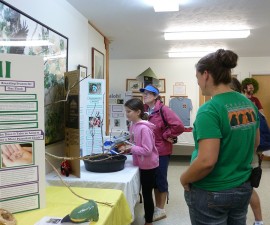
Our educational displays were all updated for our Open House event.

Our educational displays were all updated for our Open House event.

The Maui Bird Conservation Center (MBCC) hosted its Annual Open House Events in November. We house some of Hawaii’s most threatened bird species: the alala (Hawaiian crow), kiwikiu (Maui parrotbill), puaiohi (small Kauai thrush), and nene (Hawaiian goose). Our mission is to aid the recovery of Hawaiian ecosystems by preventing the extinction and promoting the recovery of Hawaii’s most threatened native birds.

As our focus is on breeding these critically endangered species, we give the birds as much privacy and seclusion as possible, and this, unfortunately, limits the amount of public outreach we can do. But once a year we get to open our doors and show Maui and its visitors a glimpse of these incredible birds and ways they can help in their conservation.

In preparation for the event, we worked very hard to update all our educational material with lots of new presentations and posters for visitors to enjoy. In addition to offering hour-long tours featuring the birds and our facility, we created a new interactive Keiki Room, with crafts and fun educational information geared toward children, and there was a silent auction with lots of fantastic items to bid on over the two days.

Robin mans the silent auction table at our Open House.

Robin mans the silent auction table at our Open House.

This year we had a record number of visitors, with almost 200 people coming through our doors! Robin Keith, senior research coordinator for San Diego Zoo Global’s Conservation Education Division, helped plan and implement this successful event with us. We advertised on a larger scale this year so we could reach more people across Maui, and the publicity proved so popular we had to add additional tours! We even had a visitor from Honolulu fly in for the day just for the event.

MBCC is one of two facilities operated by the Hawaii Endangered Bird Conservation Program, a field conservation program of the San Diego Zoo Institute for Conservation Research, in partnership with the US Fish and Wildlife Service and State of Hawaii Division of Forestry and Wildlife. This year’s Open House was a great success, and we really enjoyed sharing the work we do with so many guests. We are already looking forward to opening our doors next year! We are especially grateful to all the supporters who donated items for our silent Auction.

Mahalo (thank you) to our Maui ohana (family)!

Amy Kilshaw is a research associate at the Maui Bird Conservation Center. Read her previous post, Raising Maui Parrotbills.

3

Have Bird, Will Travel!

Alala chicks settle in at the KBCC.

My time as an intern and seasonal research associate at the Maui Bird Conservation Center (MBCC) from 2006 to 2007 left quite the impression, so I jumped at the chance to return as a research associate in February 2012. It’s been a nonstop first six months as the newest staff member at MBCC, filled with trips to the Big Island, exciting experiences, and many hungry chick mouths to feed!

The Maui parrotbill breeding season was in full swing upon my arrival at MBCC, and the first chick I participated in raising for the Hawaii Endangered Bird Conservation Program was a tiny Maui parrotbill (kiwikiu). A month later, one of our kiwikiu breeding pairs produced another chick. The transfer of this kiwikiu chick to the Keauhou Bird Conservation Center (KBCC) on the Big Island presented the perfect opportunity for me to visit KBCC for the first time. Little did I know that I would be visiting the Big Island facility three times within my first five months!

Natalie carefully holds her precious cargo at the airport.

While I have relocated chicks before, this chick was my first transfer via airplane, and it came with its own unique challenges. Kiwikiu are altricial birds, which means that they are entirely reliant upon their parents for food, warmth, and protection when they hatch. Being a 13-day-old altricial bird weighing in at only 14 grams (0.49 ounces), the kiwikiu chick was unable to completely thermoregulate (maintain his own body temperature) by the day of his journey. A miniature heating pad inside his travel carrier provided him warmth throughout the trip. Constantly monitoring the bird’s well-being, making sure all the correct paperwork was present for security purposes, and the plane ride itself made the trip an exciting and nail-biting experience! All of the pieces fit together perfectly, and the short flight to the Big Island went smoothly.

The need to transfer an alala chick from MBCC at the end of June doubled as a chance to stay a bit longer at KBCC to assist staffers with their many alala chicks. Although the MBCC alala chick was a couple of days younger than the kiwikiu chick, she weighed nearly 10 times as much as the kiwikiu! The size of this not-so-little female helped her maintain body heat, and I actually focused on making sure she didn’t overheat during her travels. Frequently checking to make sure she wasn’t too hot resulted in drawing a fair bit of attention from the Hawaiian Airlines flight attendants and fellow passengers. All of this curiosity made an excellent opportunity for educating the public and sharing about the plight of the alala! This second visit to KBCC was filled with great experiences, from the chance to educate the public about the alala to the opportunities to learn about hand-rearing of various ages of chicks and managing the many alala breeding pairs.

A palila chick gets weighed at KBCC.

Less than two weeks later, staff members at KBCC had their hands full of hungry (and LOUD—ear protection required!) alala chicks and needed an extra pair of hands… another chance for me to visit the Big Island and get more experience! By this point, I had the chick routine down and jumped right in to help out. In addition to the large number of alala chicks, KBCC had successfully hatched a palila chick. When the opportunity arose to take a break from feeding the “mob” of alala chicks, I assisted in hand-rearing the young palila. Working with the palila chick allowed me to gain invaluable hands-on experience with this intriguing species.

It’s been an amazing start to my position here at MBCC, and I’m looking forward to many more years working with and learning about these remarkable and unique species!

Natalie Staples is a research associate at the Maui Bird Conservation Center, operated by San Diego Zoo Global.

3

Aloha, Green Mama

Green Mama, one month before her passing.

It was a wet day. With an average annual rainfall surpassing 300 inches (762 centimeters), almost every day in Kauai’s Alaka`i Swamp is wet. That 26th day in April 1996, 4 tiny puaiohi eggs were collected from wild nests. In total, there were seven puaiohi (or small Kauai thrush) eggs collected that year, all a cream color with a thousand tiny, brown spots speckling the fat end, and only five were fertile.

In 1996, the Hawaii Endangered Bird Conservation Program (at that time operated by The Peregrine Fund) was spearheading efforts to recover Hawaii’s native birds. By that time, the wild population of the puaiohi was at a crossroads. It was thought to be extinct in 1950. Habitat loss, rats, cats, and disease carried by introduced mosquitoes were the biggest enemies to puaiohi survival and continue to haunt all wild forest birds in Hawaii. Luckily, this enigmatic little bird was rediscovered by Frank Richardson and John Bowles in 1960. When it was officially listed as endangered in 1967, the puaiohi was given a second chance at life; but with 177 total sightings between 1968 and 1973 and only 13 in 1983, it was in dire need of assistance.

Joop Kuhn harvests precious puaiohi eggs from the wild in 1996.

Little was known about these birds, as they had never been bred or kept in captivity. With so few individuals left, each incoming puaiohi egg was a precious gem whose population couldn’t afford mistakes. In preparation, `ōma`o, the only Hawaiian thrush not endangered (or extinct) at the time, were used as a “model” species to develop incubation and captive-rearing techniques and release methods. Wild eggs artificially incubated and hatched were considered the best option, because wild adult birds might not adapt to captive life as well as birds raised in managed care. The strategy proved successful, and 25 `ōma`o were hatched and eventually released. With the triumph of the surrogate program, the proverbial “stage” was set and ready for puaiohi.

Fluctuating cabin pressure made transporting eggs inter-island risky. Instead, the eggs were brought to local biologist Jim Denny’s “egg house” to complete their incubation and were monitored with great anticipation. The first to hatch was named Ikaika, meaning “strength” in Hawaiian. (It was an oddly fitting name, considering its inspiration came off the back of the softball shirt Jim Denny wore as he hiked through the Alaka`i!) The last egg collected hatched on April 27, and the chick, given the studbook number 5, was transported to the Keauhou Bird Conservation Center on the Big Island three days later. She grew up and laid her own eggs the following year, but none of the original eggs collected in 1996 produced males, so #5’s first eggs were infertile. Twelve more eggs were collected from the Alaka`i in 1997, and by 1998, the first fertile puaiohi eggs were laid in captivity. The following year, the first 14 birds we raised were released into the Alaka`i.

Cyndi Kuehler and Tom Snetsinger candle a puaiohi egg in 1996.

Remaining with us, #5 hatched and successfully reared seven chicks, including babies she fostered in addition to her own brood; she even fostered palila eggs! Because of this, puaiohi #5 ultimately earned the name Green Mama in part due to the tiny green band on her left leg. She was retired from the breeding program in 2002 to give her body a break but continued in her determination to benefit the species by building nests and teaching an army of staff and interns the ways of her kind.

The morning of April 25, 2012, two days short of her 16th birthday, Green Mama died. In the days leading up to her death, she showed no signs of ill health and was happy to chase after every insect tossed her way. Like most birds, she was never one to complain, but at almost 16, Green Mama was actually very old. She was the record holder for longest-lived captive puaiohi and was also the last surviving founding member of the first 15 eggs hatched during the program’s inception. Quite simply, her time had finally come.

While we mourn Green Mama’s passing, we also celebrate a great victory for the puaiohi, the only Kaua`i forest bird species that has not declined over the last decade. Recent surveys show that the wild population has increased to 500 to 800 birds and is now relatively stable. A more accurate estimate is difficult to obtain due to the difficult nature of the terrain in the Alaka`i. But at this point, our captive breeding and release program can be halted while field crews monitor the wild population to see if it can thrive on its own over longer periods of time (see post Puaiohi: Released and Breeding). Green Mama would be proud!

In the islands, aloha is an expression of the joy in one’s soul and refers to the genuine feeling of love, friendship, and compassion that is readily given to all. We use it as a greeting when giving our aloha to those we meet and to wish someone well when they take their leave. In this manner, perhaps it is best to wish Green Mama aloha as she continues her journey so we never have to say goodbye.

Sharon Belcher is a senior research associate at the Maui Bird Conservation Center. Read her previous post, Nene: Movin’ On Up.

1

Pizza for the Birds!

Amanda Maugans and Amy Kuhar are ready to spread the news about efforts to help Hawaii's native birds.

The Maui Bird Conservation Center (MBCC) and the Flatbread Company of Maui teamed up for a fund-raiser on March 20 we called “Pizza for the Birds.” In addition to helping generate funding for MBCC, the event also served to educate and raise awareness about our efforts here.

The Flatbread Company is located in the quaint beach town of Paia; it is a local favorite but also attracts many tourists visiting the island. The restaurant is known for creating a great atmosphere and delicious wood-fired, clay-oven pizzas. Most of the ingredients used to make the delicious food are organic, free-range, and sourced from local farmers. Flatbread hosts a fund-raiser for nonprofits every Tuesday night. Each fund-raiser has a banner that’s hung on the walls, giving the restaurant a unique and ever changing décor. On March 20, it was our chance to shine. Our banner was hand made by interns at MBCC during their own personal time, showing dedication to these birds both on and off the clock.

In the weeks leading up to the event, we passed out flyers and invited friends to help spread the news around the Maui community about our fund-raiser. For the night of the event, Flatbread was packed! Even though it was a Tuesday, lots of tourists and local community members came out to show their support. All of the MBCC crew came out as well to talk about the birds and explain why the work is so important. At the door, we took turns handing out brochures and answering questions about our program. It was a great way to help educate and connect with the Maui community and tourists alike. Even though some of the patrons may have been unaware of the status and threats of the endangered Hawaiian avifauna when they arrived, we feel that they left with a greater understanding of the work that goes on at MBCC.

Flatbread Company donated to our program a portion of the cost of each pizza bought that night. The Maui community and tourists rallied to the cause and ate enough pizza to generate a substantial donation to the Maui Bird Conservation Center! The money will be a great help toward improving our facilities and aviaries for our breeding programs. The night was a huge success and a lot of fun. MBCC was happy to have a chance to talk to the community and help educate everyone. A big mahalo! to the Flatbread Company for being so generous and giving back to the community!

Amy Kuhar is an intern at the San Diego Zoo’s Maui Bird Conservation Center in Hawaii, part of the San Diego Zoo’s Hawaii Endangered Bird Conservation Program.

4

`Alala Population Soars Past 100

Hatching can be an exhausting process! This brand-new 'alala rests after a successful hatch.

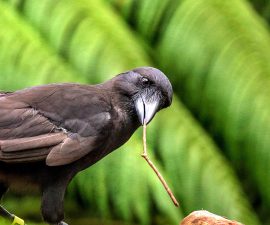
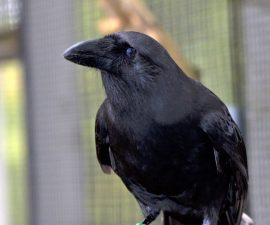
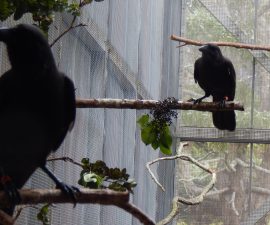
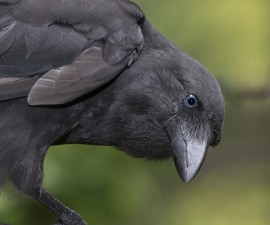
May 13 was an exciting day: our first `alala of the 2012 season hatched at the Keauhou Bird Conservation Center! Just like all our previous `alala breeding seasons, this first chick was eagerly awaited and anxiously nurtured through its first few days (see video below). Over the past three weeks, another seven `alala chicks have hatched. Crucially, on May 31, we celebrated reaching the major milestone of 100 ‘alala in the entire world population! This is quite an achievement for a population that was down to a low of 20 individuals in 1994 and is currently considered extinct in the wild. In fact, following subsequent hatches, the population currently stands at 102 birds. We are hoping for several more chicks in the weeks to come.

This is one of Po Mahina's torpedo-shaped eggs.

This year, we have continued to apply the strategy of “assisted hatching” for several of our eggs. For example, our first two chicks are siblings from the same clutch of eggs, and both required assistance to hatch successfully. Their mother, #152 Po Mahina, is only 3 years old, and this was her very first clutch. Already it seems that Po Mahina has a tendency to lay long, narrow eggs, almost torpedo-shaped. This had implications for these two chicks; in the very final stages of the incubation period, each should have been ready to chisel the cap off its eggshell with the egg tooth on the beak. However, in both cases, the chick’s head and neck was wedged so tightly into the narrow egg that they were unable to rotate inside to cut through the shell. Consequently, these chicks were in serious danger of dying from exhaustion or asphyxiation before even having the chance to hatch. In both cases, we performed the avian equivalent of a Caesarian section. With great deliberation, we carefully peeled back the eggshell piece by piece, pausing to investigate for landmarks in the hatching process (such as the retraction of blood vessels and yolk sac) before finally releasing the head and gently extracting the chick from the remnants of its shell.

Helping an 'alala chick hatch takes steady hands!

Obviously, assisting the hatch of a chick from its shell is considered a last resort, a result of the breakdown in the chick’s normal, natural hatching processes. It is quite probable that the high incidence of assisted hatching cases is a consequence of inbreeding depression, caused by the shallow gene pool of the `alala flock. It is tremendously satisfying to watch other hatchlings burst out of their shell under their own steam!

Those first two chicks are now nearly a month old and barely recognizable from the pink, naked, and helpless neonates that were extracted from their shells. With a covering of pin feathers and equipped with a raucous voice to rowdily beg for food, they are making great progress. Eventually, these two will become members of our captive-breeding flock. However, with the `alala population now exceeding 100 birds, our Hawaii Endangered Bird Conservation Program continues to be in a strong position to make plans with our partners for releasing and reestablishing `alala back in the wild.

Richard Switzer is an associate director of applied animal ecology at the San Diego Zoo Institute for Conservation Research. Read his previous post, Maui Bird Conservation Center Open House.

4

She Came, She Stayed, She Was Released

The `akiapola`au adjusts to her temporary home.

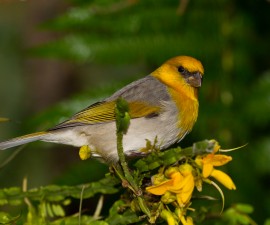
In early February 2012, our partners at the U.S. Geological Survey’s Biological Research Division called the Keauhou Bird Conservation Center in Hawaii to ask for our involvement in the recovery of an `akiapola`au Hemignathus munroi, which had been caught in a mist net at Hakalau National Wildlife Refuge on the Big Island. The `akiapola`au is a woodpecker-like member of the endemic Hawaiian honeycreeper family. This striking little creature has an unforgettable bill. It uses the broad and stocky lower mandible to hammer away at tree trunks and branches to excavate insects’ burrows or expose sap; it then uses its long and slender, curved upper mandible to probe the holes and extract the insects. `Akiapola`au are currently listed as endangered, due to threats of deforestation, habitat fragmentation, predation by introduced mammals, and avian disease.

Ornithologists often use mist nets to catch wild birds, attach leg bands, and gather important data about them such as their lifespan, migratory patterns, and biometric measurements. In this way, we add to our ever-growing knowledge of how well bird populations are fairing. However, immediately after release from the hand, this female `akiapola`au was observed flying poorly and was unable to sustain long flight or gain lift. Occasionally, when birds are caught and handled, they may suffer muscle strains, just as humans do. As you can imagine, birds have a hard time flying with strained wing or breast muscles, which in turn can affect their subsequent survival in the wild.

‘Akiapola’au habitat at Hakalau National Refuge on the Big Island

The field biologists immediately recaptured the `akiapola`au to assess her condition and judged that the bird was unfit for release. We happily provided a holding cage and waxworms for the short-term care of the bird. After a few days, it became apparent that the `akiapola`au would require long-term care to recuperate from her injuries. She arrived at our facility on February 13 and was treated like royalty; she was given a quiet environment, with limited human contact to make her as comfortable as possible. To limit the potential exposure of disease to the birds in our care, she was kept under quarantine conditions while we ran clinical tests to screen for disease.

Our feathered friend voraciously indulged herself on her favorite insects and also adjusted slowly to the selection of other items we offered. Curiously enough, we found her to be an aficionado of green peas (yes, the ones you find in the grocery store freezer section) and cantaloupe! Who would have guessed?

After about three weeks in our care, the `akiapola`au’s condition and behavior prompted us to transfer her from her recuperation cage into a small aviary as a means of assessing her flight ability. If we had any doubts about her abilities, she soon corrected them, as she showed us that not only was she back to her old self, but that she needed a bigger aviary, too! We quickly graduated her to a full-sized aviary, and she soon took full advantage with perfect flight capabilities and exhibiting natural foraging behaviors. I’m sure her neighbors—a puaiohi, palila, and Maui parrotbill—wondered about this new kid on the block who seemed to be making an awful lot of noise by pounding on all the wood in her aviary, looking for bugs.

The door is opened on Aki #1′s overnight howdy cage.

By the start of April, it became clear that the “`aki” was fit for release. On April 9, the bird was transferred back to the Hakalau refuge, stopping in at the East Hawaii Veterinary Center for a final physical exam and the “green light” for release. At Hakalau, we installed her in a “howdy cage” overnight, enabling her to settle after her long journey and acclimate herself to her surroundings. The following morning, the `akiapola`au was released into her home range, very close to the site where she had originally been mist netted. Although the field crew from the USGS had spread out, encircling the release site just in case there was problem, the `akiapola`au delighted us all by flying straight up to the canopy and appeared to adjust very well to her old wild environment.

What’s particularly special about this event? To our knowledge, it has been at least 20 years since an `akiapola`au has been kept in captivity and almost certainly the first time an `akiapola`au has been rehabilitated back to the wild. The successful rehabilitation of the `aki is a shining of example of how cooperation, husbandry expertise, and knowledge of Hawaii’s birds can lead to a very happy ending. But the conservation action for this one `akiapola`au represents just one very small piece of the jigsaw puzzle. Conservation efforts, such as reforestation, minimizing habitat fragmentation, exotic predator and feral ungulate eradication, as well as an improved understanding of the species in the wild, will be essential to ensure the `akiapola`au population has a secure future.

Rebecca Espinoza is a research associate at the San Diego Zoo Keauhou Bird Conservation Center in Hawaii.

2

Puaiohi: Released and Breeding

A released puaiohi

Winter in Hawaii is usually thought of as a “snowbirds” paradise; people flock to the islands to get away from the nasty storms associated with mainland winters. This year, here on the islands, we got to experience our own sort of winter storm. Throughout the months of February and March we were pelted with winds and rain, leaving everyone quite soggy and begging for sun. With some of the rainiest months in recent history came some new inhabitants for the island of Kauai. The crews at the Keauhou and Maui Bird Conservation Centers transferred 22 puaiohi Myadestes palmeri to the Alaka’i Wilderness Preserve for release, with special thanks to Hawaiian Airlines for giving the endangered birds their VIP seats on the plane.

This year marked the 14th release of puaiohi to the Alaka’i Wilderness Preserve. On February 13, the first 12 birds made their journey from the Keauhou Bird Conservation Center on the Big Island to Kauai and were released one week later. We apply a “soft release” principle, where the birds are housed in a hack tower for one week to get accustomed to their surroundings before having to fend for themselves; after release, we offer them supplemental food near the release site. Before these birds are released, we fit them with a small radio transmitter, attached by means of a backpack. Using radio telemetry, we can track the individuals and find out how they are doing. Our partner, the Kauai Forest Bird Recovery Project, does most of these tracking efforts, helping us evaluate the movements and survival of the release birds.

This wild bird is paired with one of the HEBCP's released birds, making their nest at an artificial nest site, evidence of successful conservation measures in action. Photo credit: Mitch Walters

The first group was lucky to have nice weather for the first few days after release, enabling the birds to explore their new home in suitable weather. This being said, quite a few dispersed farther than anticipated. The second group of 10 birds traveled from the Maui Bird Conservation Center (MBCC) on February 28, delayed by a day due to storms. From then on, this group struggled just to stay dry. The puaiohi were released on March 8, again a few days late, but seemed to do quite well, considering the unusual weather. Several of them were spotted feeding at the supplemental feeding stations, which was a relief to the crews.

Since this year spring’s release, one particular female has been of interest: puaiohi #345, a young bird who hatched at the MBCC in 2011. In the past month, this particular female has been observed paired with a wild male and, crucially, incubating eggs in a nest of her own; further proof that our released puaiohi adjust to life in the wild and are contributing to the survival of the wild population. We are hoping that this nest produces chicks and helps to ensure the population keeps growing.

Over the last 13 years, 222 puaiohi that were hatched and raised through the Hawaii Endangered Bird Conservation Program have been released back to the wild. Over the same time frame, the wild puaiohi population is estimated to have doubled to more than 500 birds; it is thought that numbers are currently remaining stable. While we love to report success stories such as this, our conservation partnership has decided to temporarily halt our puaiohi release effort. This partnership is now moving on to the next phase of species recovery, re-focusing efforts from captive propagation to protecting the species in its natural setting. This includes predator control, providing artificial nest boxes that are predator proof, and habitat restoration.

With efforts to protect the wild nests and habitat of puaiohi, as well as other critically endangered species on the island of Kauai, we hope to see many more nests in the future, just like that of #345’s.

Rachel Kingsley is a research associate at the San Diego Zoo Keauhou Bird Conservation Center in Hawaii.