Plants

Plants

3

Native Seed Bank

Lauren processes native yucca seeds.

When I tell people I collect seeds for seed banking, the first question I’m asked is if the collections are stored in the Svalbard Global Seed Vault, which is located on the Norwegian island of Spitsbergen. While it’s awesome that so many people know about that bank, please know that it is used primarily for agricultural species. Native plant species, especially those that are not threatened or endangered, receive much less attention. There are very few native seed banks around the world, and San Diego County happens to have one of them.

Seedlots await processing. Note the cut out in the wall, showing the building is made of straw bales.

The seed bank here at the San Diego Zoo Safari Park houses more than 500 different plant populations. It is a straw-bale, solar-powered structure that has all sorts of interesting contraptions used for seed processing. The seed bank is located at the back of the Safari Park and is the first permitted straw-bale building in San Diego County. Cleaning and storing seeds is time consuming and often tricky, but it can also be very rewarding. Our goal is to collect multiple populations of the same species, as each population may have adaptations unique to its location. San Diego County is home to over 1,500 different native plant species, so that adds up to a lot of seed collections!

When we first find a population that we want to collect, we take clippings of the plant and press them to preserve the specimens as herbarium vouchers. It is best to take a sample that has both flowers and leaves so that a specialist can verify the species. Our herbarium vouchers are sent to the San Diego Natural History Museum for verification. Data on the location, soil color, slope, habitat, and associated species are also collected. After theses initial steps are taken, we monitor the population until enough of the seeds ripen for a collection. We often have to compete with herbivores and rough weather to collect the seeds before they are lost.

Lauren at work conserving seeds native to San Diego County.

Once the collection is made, it is taken back to the seed bank and processed. The steps involved in processing the collections generally depend on each particular species. The seed and plant material is often rubbed over screens of various sizes until the seed is separated from its various shells, pods, leaves, pappi, and stems. Once separated, it is run through air separators so that lighter material is blown off and/or the seeds are lifted away from the heavier debris. Even after all of these techniques are used, we are often left with seed that is still mixed with extra plant material. When this happens, our only option left is to clean the seed by hand. With larger seeds this can be fairly easy, but with the small seeds it often involves a microscope, tweezers, and a lot of patience!

Clean seed lots are placed in the drying room to lower their moisture level. Once the seeds reach a moisture content of five to nine percent, they can be placed in long-term storage in a hefty freezer. Five hundred of the seeds are counted out into groups of 100 and then weighed. We then weigh the entire collection of seed in order to estimate the total number of seeds. At least 10,000 seeds are placed in storage at a time. If there are extra, they are set aside for future restoration and research. The seed is sealed in double-layered foil bags and frozen. It has been proven through germination testing that frozen seeds remain viable for decades.

Lauren Anderson is an intern at the San Diego Zoo Institute for Conservation Research through the Bureau of Land Management’s Seeds of Success Program. Read her previous post, Exploring Anza-Borrego Desert.

1

Exploring Anza-Borrego Desert

Lauren takes in the view at Anza-Borrego.

Lauren Anderson and Miguel Kaminsky are interns at the San Diego Zoo Institute for Conservation Research through the Bureau of Land Management’s Seeds of Success Program. As part of the internship, they make collections of seeds from plant species vital to Southern California habitats. The seeds will be preserved and studied, and eventually help restore habitats damaged by fire or during development projects.

From day one at the Institute I’ve heard people talk about how beautiful the Anza-Borrego Desert is. This year’s Seeds of Success collections focused more on the areas surrounding Ramona. While the properties we scouted in the Ramona area were very diverse and interesting, they were all composed of the same types of plant communities. This was the first week we’ve been able to make it out to the desert transition areas leading into Anza-Borrego, and it offered the chance to explore something new.

Roadrunner

When planning to explore a new property, the first step is to find one that has access. For our internship, we are only allowed to make seed collections on Bureau of Land Management (BLM) lands, and they don’t always have roads. We look at layers of BLM land on GIS and then choose one that looks reasonable to access. To do this, we largely depend on images from Google Earth. The only problem with this is that it can be difficult to determine if something is a dry creek or a little-used road. But for this desert adventure we were fairly sure that we could get within walking distance of the site.

Another part of scouting that is always fun is navigating back roads. The first dirt road we turned off on was well kept, the second one was less so, and on the third road I felt the tires sink a few inches into soft ground. We managed not to get the truck stuck, which was a very good thing since we didn’t have cell phone reception and faced having to hike several miles to a main road if we did.

The site itself was a combination of hills and dry-wash ravines with an amazing number of different plant species. Anza-Borrego definitely lived up to the hype. After exploring for a couple of hours, we determined that we could make three collections starting next week when the seeds would likely be mature enough to collect. Really exciting, and a reason to come back to enjoy Anza’s beauty!

0

What’s the Difference between a Species and a Variety?

Wild buckwheat Eriogonum fasciculatum

Miguel Kaminsky and Lauren Anderson are interns at the San Diego Zoo Institute for Conservation Research through the Bureau of Land Management’s Seeds of Success Program. As part of the internship, they make collections of seeds from plant species vital to southern California habitats. The seeds will be preserved and studied and eventually help restore habitats damaged by fire or during development projects.

This internship has provided a lot of new experiences and opportunities for learning. Specifically, events during the collection of wild buckwheat Eriogonum fasciculatum seeds at El Capitan Open Space Preserve compelled me to review some basic biological concepts regarding speciation. The whole exercise began when Lauren and I went on a seemingly routine mission to collect Eriogonum seeds. By the time we each filled a quarter of a bucket with seeds and associated material, Lauren pointed out extensive variation in the leaf morphology of the plants we were collecting. Some plants had linear, light green leaves while others had much wider, blue-green leaves with an almost woolly layer of flattened hairs. To make matters more confusing, some plants had shoots exhibiting both leaf types. This made us think there was hybridization of some sort going on, so we decided to do some further research before packaging this collection to ensure we had seeds from just one species.

Upon consulting a plant atlas, we learned that there are three varieties of Eriogonum fasciculatum in the area we were sampling.  These are var. fasciculatum, var. foliolosum, and var. polifolium.  Var. polifolium has the wider, oblong, woolly leaves while var. foliolosum has the linear leaves that aren’t nearly as woolly on their upper surface. In turn, we inferred that the individuals we encountered were  vars. foliolosum, polifolium, and mixes of the two.

Although we determined the collection was not useful to us because we needed seeds with a varietal lineage free of comingling, this left me with some fundamental questions. Why aren’t these morphologically distinct populations classified as different species? What is the difference between a species and a variety?

Lauren Riesberg, in her extensive writings addressing speciation and hybridization, cited Mayr’s definition of a species as “groups of interbreeding natural populations reproductively isolated from other such groups.” However, species that are not geographically isolated have been known to interbreed and produce hybrid offspring. Wikipedia defines a variety as a genetically, and in turn, morphologically distinct subset of a species that is geographically isolated from other populations within that species. However, when the geographic barrier is removed, this subset interbreeds with the rest of the species, resulting in an influx of genes that erodes the variety’s distinct features, thus reintegrating it into the greater species group. With this in mind, I distinguish species and varieties based on the fact that a hybrid of two species produces offspring with reduced fertility, such as malformed pollen grains, while a hybrid of two subspecific varieties produces offspring that show no such deformities and reflects the traits of the original species.

El Capitan Open Space Preserve

In light of these considerations, I came to the conclusion that the El Capitan Open Space Preserve is a very special place in the origins and family history of Eriogonum fasciculatum. According to “Flora of North America,” Eriogonum fasciculatum var. folilosum came about from an ancient hybridization event between vars. fasciculatum and polifolium. This event likely happened at places much like the El Capitan Open Space Preserve, where these populations intermingle. Eventually, isolated populations of these varieties might inbreed to the point that they become reproductively isolated from the parent varieties, giving rise to new species through divergent evolution.

El Capitan offers a living snapshot into the evolutionary history that drives speciation. In conclusion, this experience reminds me that speciation is a dynamic process taking place in our backyards, in present times, while we go about our daily lives.

0

Plants: Take A Step Back

Zoo InternQuest is a seven-week career exploration program for San Diego County high school juniors and seniors. Students have the unique opportunity to meet professionals working for the San Diego Zoo, Safari Park, and Institute for Conservation Research, learn about their jobs, and then blog about their experience online. Follow their adventures here on the Zoo’s website!

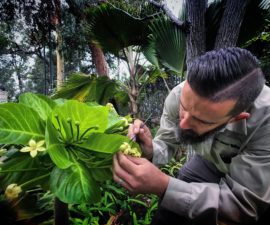
Plants may be overlooked by visitors at the San Diego Zoo, but once you take a step back, you can capture the full effect of your surroundings. Beauty abounds in all corners of the Zoo, and today we realized that while taking a tour with Horticulture Collections Manager Mike Letzring and Senior Horticulturist Judy Bell.

Walking through a bamboo-covered path, we learned this rapid growing grass not only adds to the ambiance but is used to feed some of the animals, like the giant panda.

Southern pitcher plants are carnivorous plants getting most or all of their nutrients from digesting animals and insects. Unsuspecting victims crawl into the tubes and never come out.

The interns dined on a feast of fruit fit for a king. These two fruits, the dragon fruit and banana apple, are grown on Zoo grounds. They were something that I, and probably some of the other interns, have never tried before. They appear unusual on the outside but were delicious.

This is what a bird would see if it were flying over a cycad. These ancient plants have been around since the age of dinosaurs . The orange center is the cone, which makes it more closely related to conifers than palms. The Zoo is home to one of the largest collections of cycads in the world.

Teghan is smelling one of the ginger flowers that are growing at the Zoo. The animals aren’t the only things to look at—take time to smell the roses.

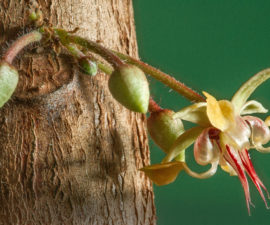
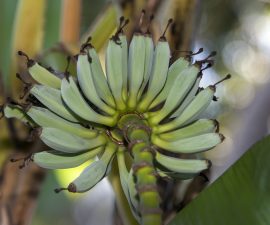
This isn’t the usual picture most of us get when we think of bananas. These are apple bananas that are grown here at the Zoo. This is what real, natural bananas look like. The ones at the store have been hybridized so they are more appealing to consumers.

Natural beauties are in abundance at the Zoo. There is something at every corner waiting to be discovered; it’s the little things you find that can make your day complete.

0

Plants: Covering the Globe

Zoo InternQuest is a seven-week career exploration program for San Diego County high school juniors and seniors. Students have the unique opportunity to meet professionals working for the San Diego Zoo, Safari Park, and Institute for Conservation Research, learn about their jobs, and then blog about their experience online. Follow their adventures here!

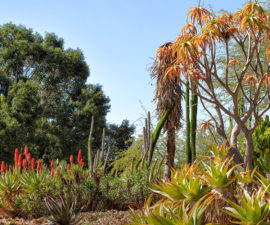
Horticulture, the science of cultivating plants, is directly connected to our everyday life. Plants supply vast amounts of resources such as oxygen, crops, structure, medicine, and much, much more. Michael Letzring, horticulture collections manager, and Judy Bell, senior horticulturalist, welcomed us into their world of horticulture. We had the chance to get an inside look at just a mere sample of the rare and valuable plant collection at the San Diego Zoo.

Have you ever noticed the big palm trees in the flamingo exhibit near the front of the Zoo? They are called fishtail palm trees and are just one of the many unique plants here at the Zoo. A fishtail palm produces sap that has a high sugar content and is used to make syrup and alcoholic beverages. This palm is unique in the fact that its fruit is poisonous and inedible. This is because of the acid in juices of the fruit. The fruit can actually burn your skin if you touch it! An average fishtail palm can live 30 to 35 years and grow between 30 to 50 feet high. The palms’ native range is from sea level to the mountain slopes in India and Burma. Wow, who would ever have thought that there was so much information to learn about a single plant? I was amazed, and it left me eager to learn more about horticulture.

Believe it or not, plants are susceptible to disease just like animals and humans. It’s our responsibility to help preserve the precious plant life on our planet, and the San Diego Zoo is helping to do just that. Ms. Bell told us about the amazing “seed bank” project the San Diego Zoo Institute of Conservation Research is doing to help protect native plant life in San Diego County. A seed is collected, cleaned, and then stored in either long-term or short-term collections. Over a time period seeds will be randomly tested for germination to make sure they are still viable. The Institute is hoping to collect 400 native plant species in San Diego County over the next 3 years.

While touring some beautiful areas of the San Diego Zoo with Mr. Letzring and Ms. Bell, we were shown how many of the enclosures have been built around the natural growing foliage such as the large trees that are used to support the netting located around the monkey enclosures. Many bushes and shrubs have been left in place to provide décor, natural barriers, and a sense of “home” for the animals.

The next time you visit the San Diego Zoo, take a moment to not only see the animals but take some time to look at fantastic greenery around you! People are often told to take a moment to stop and smell the roses. Well, I say take a moment to look at the trees and enjoy the beauty of the abundant plant life around you. It is simply beautiful.

Sierra, Real World (week 2)

0

Horticulture: Undercover Conservation

Zoo InternQuest is a seven-week career exploration program for San Diego County high school juniors and seniors. Students have the unique opportunity to meet professionals working for the San Diego Zoo, Safari Park, and Institute for Conservation Research, learn about their jobs, and then blog about their experience online. Follow their adventures here on the Zoo’s website!

When a guest walks around the Zoo, they squeal at the hippos, smile at the monkeys, but will rarely take note of the plants. At the San Diego Zoo, the horticulture team takes pride in their collection of rare and extremely well maintained plantlife. Thursday, we met with Horticulture Collection Manager Michael Letzring and Senior Horticulturist Judy Bell. Together, they shared their vast knowledge on flora and how San Diego Zoo Global horticulturists contribute to the conservation of animals, plants, humans, and the globe.

Vegetation largely affects the success of animal life in zoos. Horticulturists assist with exhibit design to help ensure the animals have a happy and healthy life. The huge success of the Zoo’s animal breeding program would not be what it is today if not for the skill of its horticulture teams. By working with animal specialists, Mr. Letzring and Ms. Bell create environments in animal exhibits that simulate natural animal instincts. (Mr. Letzring explained that the team often finds substitutes for foliage found normally in a wild ecosystem, since San Diego’s desert region is too stressful for most nonnative plants.) Through an understanding of how the environment affects animals’ breeding habits, plant specialists, like our speakers, put foliage in enclosures that is safe for animals to eat and can be played with, making animals more comfortable at the Zoo. When animals are comfortable it is more likely that they will reproduce. In the case of the sociable weaver birds we were shown, their enclosure had to have a variety of grasses and trees so they would have enough materials to build their large nests, which can weigh as much as one ton! As a means of socialization, breeding, and happiness, it is very important to have a great horticulturist working with keepers to preserve the species in captivity.

Plant conservation also helps the Zoo be a very sustainable place. One example of this is the bamboo grown throughout Zoo grounds, which is harvested and fed to the giant pandas, takins, and red pandas. Additionally, if a tree falls over and needs to be removed, the tree will be taken out of the ground and then reused as an enrichment item for many of the animals. Next time you go to the Zoo, look for those logs or branches in exhibits that may have been found living elsewhere previously.

Just like the fear of endangered animal extinction, there is the threat of plant extinction too. As mentioned, plants play a vital role in the lives of wild creatures in more ways than just food. It is up to humans to protect the plant life, and the Zoo has done so in many ways. One way they are preserving natural flora, Mr. Letzring proudly explained, is a new method of collecting data from “tissue culture.” Considering the practice as the future of plant conservation, Mr. Letzring assured us that “we [the San Diego Zoo] want to master that.” The procedure is original, in that researchers take only samples of tissue from wild plants and bring those back to labs for studying. Previously, the entire specimen would be taken from its environment. Mr. Letzring was adamant about how endangered plant species will benefit from not decreasing in population because they are being studied.

The San Diego Zoo Institute for Conservation Research, together with several other organizations, is working to create a “seed bank” that will house a large collection of seeds from plants native to San Diego. These seeds will be used for both science and emergency preparedness. Ms. Bell informed us that as scientists perfect plants to meet certain aesthetics, or to have new functions, they weaken the original strand of the plant. Having the original strain of the plants in the bank allows researchers to learn more about plants by comparing the two. The seed bank also conserves the local flora and fauna. In a matter of cause and effect, the seed bank is essential in conserving all life in case of a serious drought or plant disease. For example, if a disease emerges in all of the local corn fields and there is no more corn, the rest of the food chain- including humans- will be greatly affected. Without corn, livestock won’t have a large food source and once they become ill, grocery stores won’t have any animal by-products to feed us. It is a great conservation tool of all local life to have a seed bank that can renew our crops in a disaster.

With a commitment to the plant collection, Mr. Letzring and Ms. Bell make the Zoo experience what it is today by creating ideal enclosures for the many breeding animals, supporting efficient research practices, and reusing plant material. Whenever guests next visit the Zoo, I hope they notice the importance of the beautiful flora around them, which create all the cute babies that we love to go and see.

Eliana, Conservation (Week 2)

0

Biomimicry: Nature Deals with Fire

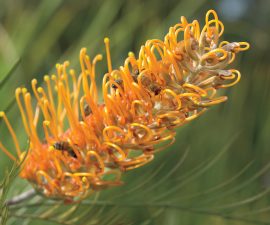
The seed-laden cones on banksias can survive the flames of a rushing wildfire and use them advantageously. Pictured is scarlet banksia, in Southwest Australia.

I woke up the other morning to the smell of smoke, an unfortunate sign of fall here in San Diego. Luckily, it was a small brush fire and contained before the dry, Santa Ana winds really picked up. It was a sober reminder that we live in a part of the world that has fires. Our fire season is a natural cycle and has been going on for millennia. We are not the only part of the world where fire is part of the ecosystem. Fires can occur all over the world, but in South Africa, Australia, and California, it is a routine. So perfectly, like most things in nature, native plants in these areas have developed ways to grow and even use fire to their advantage.

Fire is destructive, yet it does serve a purpose. It clears vegetation, produces nutrients, and opens up light to the forest floor. Many plant seeds in wildfire country, like conifers and proteas, are enclosed in a fire-proof, protected cone. These cones are designed for fire. A more specific example of this is the beautiful banksia of Southwest Australia. The seed-laden cones on banksias can survive the flames of a rushing wildfire and use them advantageously. The intense heat causes the valved capsules, which contain the seeds, to open up. When the fire passes and the cones cool off, the seeds fall to the ground, ready to become new plants. Because the fire has burned vegetation and let in sunlight, the altered forest floor is now the ideal place for the seeds to successfully germinate; a perfect and well-tested system in this seemingly harsh environment.

A common grasstree in Perth, Southwest Australia, is renewed by a brush fire.

So what can we take away from this? How can we use nature here as our teacher? Well, we already have at least one example of using fire to our advantage, and ironically, it protects us from fire. Sprinkler systems in buildings activate by burning a release mechanism. Once engaged, the water will put out the flames. But we should look beyond this.

There are two options for the millions of people who live in fire-prone areas: either move away or learn ways to deal with this natural occurrence. Since most of us are going to stay, perhaps we can look into paints that change their chemical structures when intense heat is applied and, in turn, form a fire-resistance barrier. This would be a savior for houses and structures. Even reforestation projects could be preemptively done, where native seeds could be set out ahead of time, in nonnative stands of plants, waiting for the inevitable wildfire.

Many good ideas could, once again, come to us by looking at how nature tackles adversity. Our mindset could change so that instead of waking up to the smell of smoke and being in fear, we could be inspired.

Seth Menser is a senior horticulturist at the San Diego Zoo. Read his previous post, Biomimicry: Hope for the Future.

0

Stop and Smell the Flora

Zoo InternQuest is a seven-week career exploration program for San Diego County high school juniors and seniors. Students have the unique opportunity to meet professionals working for the San Diego Zoo, Safari Park, and Institute for Conservation Research, learn about their jobs, and then blog about their experience online. Follow their adventures here!

Did you know that bamboo is not just used to feed pandas, but also to make clothes, flooring, scaffolding, and is even used as an ingredient in beverages? I learned this fact while touring the Zoo with Horticulture Collections Manager Michael Letzring and Senior Horticulturist Judy Bell.

A part of the Zoo that the millions of visitors per year never notice is all of the amazing plants that reside there. Many people come to the Zoo to view and learn about the different species of animals on exhibit but don’t even realize how important, useful, and beautiful all of the vegetation is. As horticulturalists, Mr. Letzring and Ms. Bell are directly involved with teaching others about the plant life, and with the Zoo’s horticulture.

Horticulture is a huge part of what makes the Zoo so fascinating, and is very important to help it function. Horticulturists are interested in the science and management of plants, working and conducting research on cultivation, plant production, plant breeding, and more. They work with all types of vegetation, including trees, shrubs, flowers, grass, and fruits. Horticulturists like Mr. Letzring and Ms. Bell are such an important part of the Zoo staff, as they help maintain and improve the plant life by keeping it alive and flourishing. They are involved with many responsibilities that range from designing and developing exhibits, managing plants within these exhibits and in visitor areas, growing plants for the animals’ diets and enrichment, establishing a vast collection of plants for the Zoo, to raising awareness about plants and plant conservation.

Mr. Letzring didn’t always want to work with horticulture. When he was younger, his family had a garden that he worked in, but he was really interested in oceanography. Later, he realized that there was a demand for horticulturists, and after taking classes at a junior college, he fell in love with it and never left. He has been working in the Horticulture Department of the Zoo for 15 years, and before becoming the collections manager, held several positions including lead gardener and horticulture manager. He is interested in plants, especially edible plants. Edible plants are those that are safe to eat and often are vital in the diet of animals. Many are found within the Zoo, including tropical cherries, guavas, Hawaiian apple bananas, and dragon fruit.

A day at the Zoo for Mr. Letzring encompasses many activities. He enjoys getting his hands dirty and working directly with plant life, but he has many other responsibilities. As a manager, he does many things for the immediate need, such as filling in for others, but also spends some of his day doing paper work and managing budgets, or even getting involved in the more exciting aspects like exhibit design. When Mr. Letzring first started, a large part of his time was spent learning a lot about plants, but now he is able to share what he knows with others. He loves helping with conservation by giving information to others through activites like giving tours to interns like us.

Ms. Bell first got her degree at San Diego State University before starting her career at the Zoo in 1977. She then transferred over to the Horticulture Department ten years later, where she has been working ever since. Although she enjoys working with horticulture, there are many challenging aspects of her job. She has to try to make animals as comfortable as possible in their exhibits by utilizing plants to create an environment similar to their natural habitat. Ms. Bell has to try to create a landscape that works well with the exhibits and animals, while also looking at the aesthetic side.

One problem she has encountered was trying to make a functional artificial tree. She was able to come up with an innovative solution by creating a metal base for structure and filling it full of flex tubes. Cuttings of real branches with leaves were then connected off the sides, where they were provided with their own soil and irrigation system. From there, they would grow similarly to how they would on their original trees. It was appealing to viewers but also beneficial to the monkeys that were located in an exhibit next to it, because they had structural support and natural browse to choose from. Horticulturists are faced with many problems like this, and keep the exhibits running by working had to solve them.

It is vital for people to understand the importance of the plant life at the Zoo. Luckily, there are horticulturists like Mr. Letzring and Ms. Bell who are dedicated to getting the information to the public. Horticulture is a remarkable line of work that is very beneficial to our world. There are many ways to get into this field, whether you take the traditional route or you become involved in volunteer work to get experience. Zoo horticulture is much more than just planting and landscaping; it is critical for the well-being of vegetation and for informing people about the importance of the plants at zoos.

Molly, Careers Team (Week 2)

79

Pandas, Bamboo, and Biomimicry

Bai Yu shows off a paw adapted for bamboo holding.

This summer the San Diego Zoo’s gates stay open a little later, and guests have the opportunity to hang out with their favorite animal friends longer than usual. Our Nighttime Zoo theme, China Celebration, offers a great opportunity to explore the inspirational adaptations of Chinese plants and animals. The process of studying biology in order to gain inspiration to be applied to human design is known as biomimicry or bioinspiration.

Starting with the most popular ambassador of China that we have at the Zoo, our giant pandas are quite the anomaly of the Animal Kingdom. Though their digestive systems and taxonomic classification hint that they should be carnivorous, they are instead so famously partial to bamboo. They even have a specially adapted “thumb” to grasp bamboo stalks as they strip the leaves. This “thumb” is not really a thumb at all but a modified wrist bone, giving pandas the odd appearance of having six fingers on their front paws. Astronauts, with their puffy space gloves, can’t grip nearly as well as our furry black-and-white bears. Just think how effective a robotic panda paw would be when repairing structures in space.

Almost as interesting as the pandas in the realm of biomimicry is their staple diet item, bamboo. Bamboo is a sustainable wood resource AND a source of inspiration for stability in structure. The round, hollow tube of bamboo provides support that allows the stalks to grow very tall and thin without snapping in half. As bamboo bends, the circular cross section bends into an oval, allowing flexibility in order to keep the stalk intact. Bamboo, unlike other plants, has a unique site of photosynthesis. While most plants use leaves as their solar collectors (bamboo included) bamboo plants also have chloroplasts on their stalks. Taking hints from bamboo’s strong structure and efficient use of space can provide inspiration for the design of future buildings.

Another creature from China, just as important to the ecosystem but significantly less cuddly than the panda, is the Mang Mountain pit viper, which will soon be exhibited in the Zoo’s new Panda Trek habitat. This venomous snake is part of a subfamily known and named for its infrared-sensing tissue contained in pits located between their eye and nostril. The Mang Mountain pit viper is a beautifully colored snake with alternating ragged bands of green and brown with the last ten inches or so of its tail a very light blue, an adaptation used to lure in prey. Once prey is unfortunately close (from its perspective) the pit viper strikes and pierces its prey with its almost inch-long fangs. Vipers have astonishing control over their venom secretion, a beneficial trait to conserve a precious and energy-intensive resource. They can release venom through the left fang only, the right fang only, both fangs at once, or none at all. They do so by flexing a muscle near the venom sac that expels the liquid out of the sac and down a tube ending in the fang. Snake locomotion has already inspired several different robot prototypes, but studying venomous snakes and their venom injection system could also inspire new responsive, resource-conscious liquid dispensers.

There are many other inspiring animals from China and from around the world at the San Diego Zoo and San Diego Zoo Safari Park. Who knows, maybe for your next invention you will be crediting a panda as a consultant!

Dena Emmerson is a biomimicry research assistant at the San Diego Zoo. Read her previous post, Nano-inspiration: Small Size, Big Potential.

Be sure to visit our Biomimicry section for more information about this exciting field of study.

0

Biomimicry: Hope for the Future

Meerkats have dark hair around their eyes to protect them from the sun.

We live lives of convenience and ease. Our forefathers and mothers would be astonished at the technological and scientific advances we have made in the last 100-plus years. Diseases have been cured and communication has become instantaneous. In this short time, we have gone from using horses and boats for transportation to cars, trains, airplanes, and even spaceships to take us even further. It is unprecedented that we can now get to the other side of the world in less than a day. If we could go back in time and show people in the 1800s what life is like today, we would probably be laughed out of town. Yet all these achievements have come at a cost. Much of our planet’s flora and fauna have become endangered, and in many cases extinct, because of the depletion of natural resources and environments. Even our medicines today are becoming less and less effective as viruses are building resistances to them. The tide of thinking has changed for the better, recently, in solving tomorrow’s problems as the idea of using the natural world as our teacher has replaced our drive to contain and alter it. We call this “new science” biomimicry, and it is undoubtedly going to be the next major element toward shaping our future in a sustainable and responsible manner.

The idea of using certain desired characteristics of plants, animals, and organisms is not new. In fact, if you go back in history you will see many examples of this, from using palm fronds, which repeal water, as roofing on shelters to Leonardo da Vinci observing birds in flight and developing his concepts of “flying machines.” Even today such simple examples of biomimicry exist, and we probably don’t make the connection to the natural world. Just look at football and baseball players on sunny days: many of them put black grease under their eyes to protect them from the sun, as the black color absorbs the sunlight, giving them better vision. Dark colors around eyes can be observed in many diurnal animals, most famously the meerkat. Meerkats need this protection, for they spend a good part of their days with their eyes to the sky on the lookout for predatory birds; in southern Africa, where they are from, the sun is plentiful.

Looking back, we have a clearer picture of the damage we have done to our environment. The common consensus is that we need to move in a different direction toward tomorrow or lose everything. Using the natural world as our classroom makes perfect sense. Plants, animals, and organisms have been hard at work for a few billion years, perfecting solutions for problems. Why would we need to look anyplace else? Biomimicry offers us a whole new world of possibilities and answers. It is a step in the right direction; actually, it’s the “natural” choice.

Seth Menser is a senior horticulturist at the San Diego Zoo. He will be contributing periodical blogs on biomimicry, with an emphasis on the botanical world. Read his previous post, Caudiciforms: Botanical Camels.

Learn more about the exciting field of biomimicry.