Uncategorized

About Author: Amy Kuhar

Posts by Amy Kuhar

1

Alala: Does Mother Know Best?

Here is alala Pomahina's nest and two eggs.

These are two of the three eggs PoMahina was incubating; photo taken during one of several brief nest checks

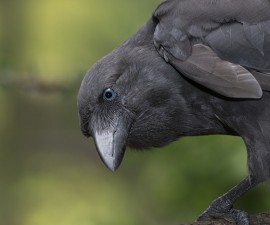
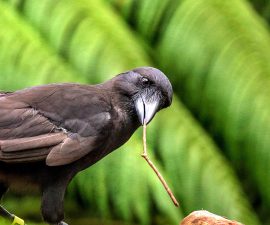
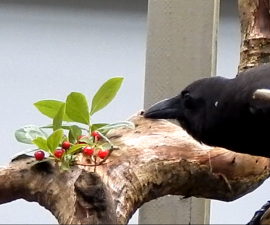
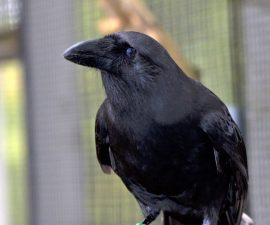
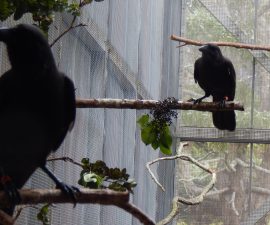
Spring is the time of year when most birds are busy building nests, laying eggs, and raising hungry chicks. For the alala (Hawaiian crow), it has been more than 20 years since any members of the species have successfully raised their own young. Since its inception, the Hawaii Endangered Bird Conservation Program has focused on pulling eggs for artificial incubation and hand-raising chicks as a means of maximizing the reproductive success of the tiny alala population. However, this spring there is change and new hope in the air! We are happy, but cautious, to announce that we have a female alala showing promising indications of successfully rearing her chicks!

Pulling alala eggs from the parents’ nest and then placing the eggs in incubators enables us to closely monitor the conditions that would allow the best chances for the eggs to hatch. It also gives the female an opportunity to lay more eggs. Once the chicks hatch, they are hand-reared until they are old enough to feed themselves. These alala parent pairs have great genetic value because they only have a few or no offspring, meaning their genes are not well represented in our flock’s family tree.

Over the last 4 years we have raised 53 alala chicks, and at the start of the 2013 season, the population stood at 108 birds. Now that we have a solid footing in the recovery effort, we are focusing our effort on natural incubation and parent-rearing for a select few alala pairs. One of our more prolific females, PoMahina, comes from a well-represented genetic line and already has three surviving offspring in the flock. This gives us the rare luxury of being able to allow her the chance to parent-rear.

Not surprisingly there are many questions and concerns about whether alala will be able to take care of their own offspring. All 108 alala in existence have been hand-raised. It has been speculated that there could be learned behaviors and an alala “culture” that may have been handed down through the generations in the wild that has been lost. Two years ago, an alala egg was given to a female, shortly before hatch, for her to attempt to foster-parent rear the chick. The foster mother was seen on camera feeding and caring for the chick, but sadly, the chick died a few days later. Unfortunately, not much is known about how alala reproduced in the wild. It is crucial that we use opportunities like this to learn as much as we can about the monitoring and management of alala nests to give the species a greater chance of survival in the wild. With the first release of alala potentially planned for 2014, the timing could not be any better!

In early April, PoMahina laid three eggs, and after a brief nest check to the eggs, we confirmed that all three were fertile. After approximately 23 days of incubation, three tiny chicks hatched on April 30, May 1, and May 2. Keep visiting the Hawaiian Birds blog for our updates on how the parent-rearing process is going!

Amy Kuhar is a research associate at the San Diego Zoo’s Keauhou Bird Conservation Center in Hawaii. Read her previous post, Pizza for the Birds.

1

Pizza for the Birds!

Amanda Maugans and Amy Kuhar are ready to spread the news about efforts to help Hawaii's native birds.

The Maui Bird Conservation Center (MBCC) and the Flatbread Company of Maui teamed up for a fund-raiser on March 20 we called “Pizza for the Birds.” In addition to helping generate funding for MBCC, the event also served to educate and raise awareness about our efforts here.

The Flatbread Company is located in the quaint beach town of Paia; it is a local favorite but also attracts many tourists visiting the island. The restaurant is known for creating a great atmosphere and delicious wood-fired, clay-oven pizzas. Most of the ingredients used to make the delicious food are organic, free-range, and sourced from local farmers. Flatbread hosts a fund-raiser for nonprofits every Tuesday night. Each fund-raiser has a banner that’s hung on the walls, giving the restaurant a unique and ever changing décor. On March 20, it was our chance to shine. Our banner was hand made by interns at MBCC during their own personal time, showing dedication to these birds both on and off the clock.

In the weeks leading up to the event, we passed out flyers and invited friends to help spread the news around the Maui community about our fund-raiser. For the night of the event, Flatbread was packed! Even though it was a Tuesday, lots of tourists and local community members came out to show their support. All of the MBCC crew came out as well to talk about the birds and explain why the work is so important. At the door, we took turns handing out brochures and answering questions about our program. It was a great way to help educate and connect with the Maui community and tourists alike. Even though some of the patrons may have been unaware of the status and threats of the endangered Hawaiian avifauna when they arrived, we feel that they left with a greater understanding of the work that goes on at MBCC.

Flatbread Company donated to our program a portion of the cost of each pizza bought that night. The Maui community and tourists rallied to the cause and ate enough pizza to generate a substantial donation to the Maui Bird Conservation Center! The money will be a great help toward improving our facilities and aviaries for our breeding programs. The night was a huge success and a lot of fun. MBCC was happy to have a chance to talk to the community and help educate everyone. A big mahalo! to the Flatbread Company for being so generous and giving back to the community!

Amy Kuhar is an intern at the San Diego Zoo’s Maui Bird Conservation Center in Hawaii, part of the San Diego Zoo’s Hawaii Endangered Bird Conservation Program.